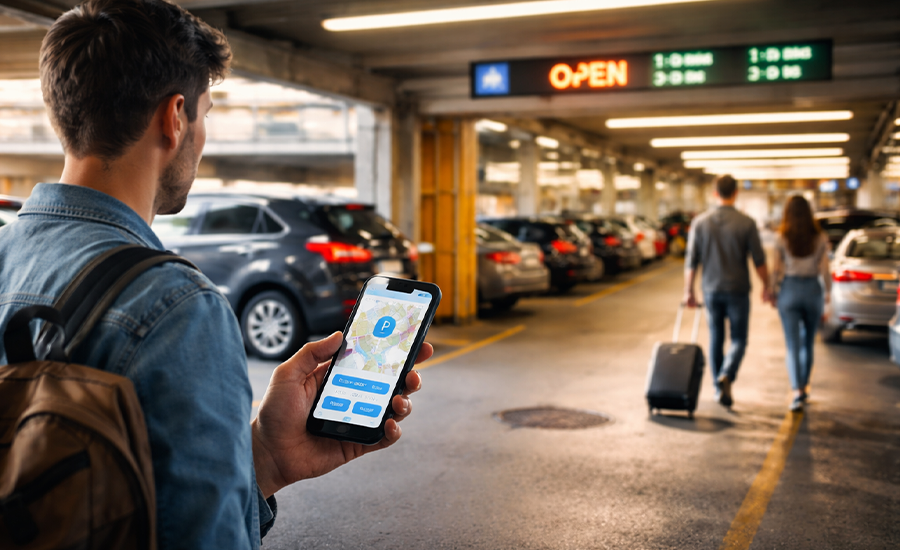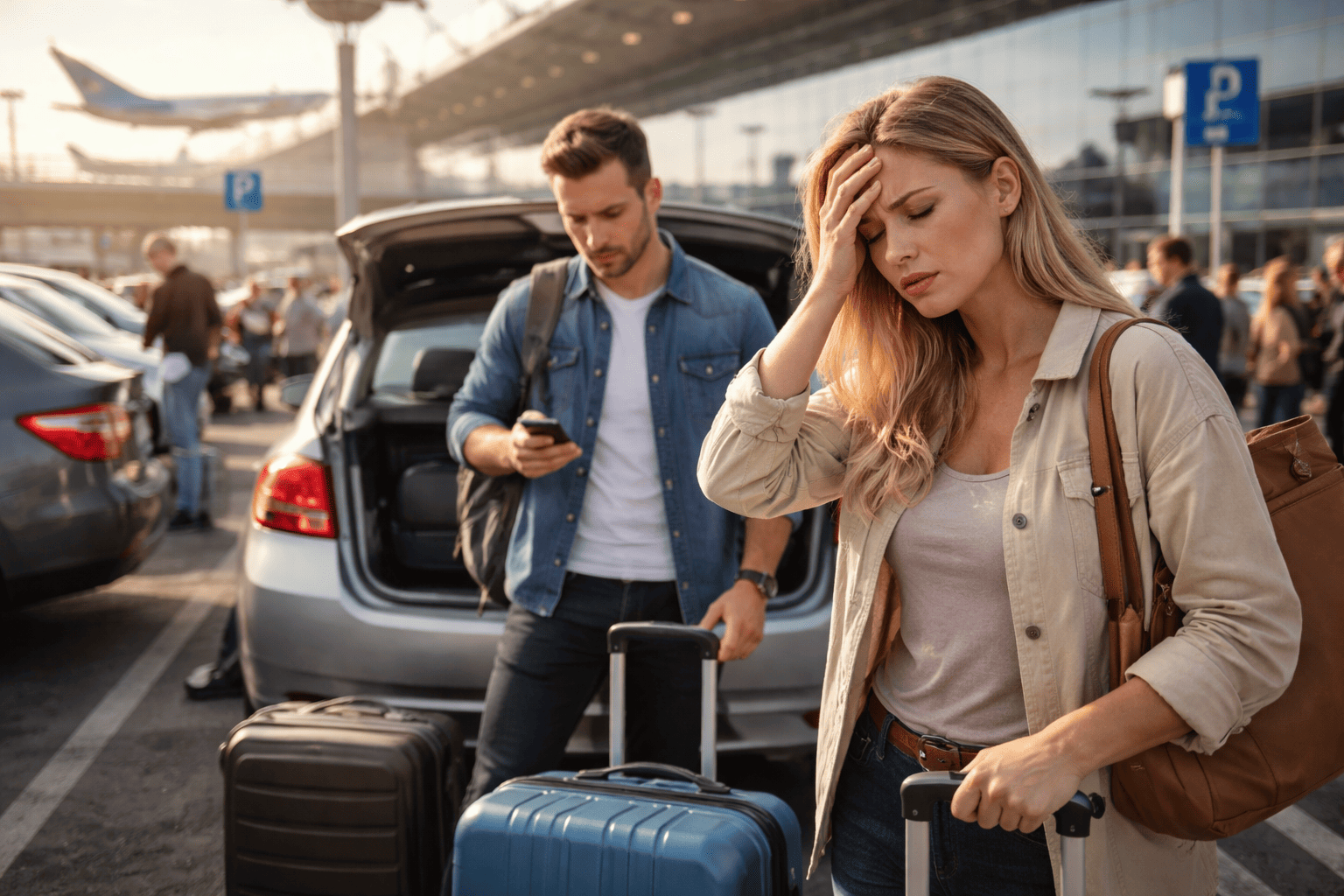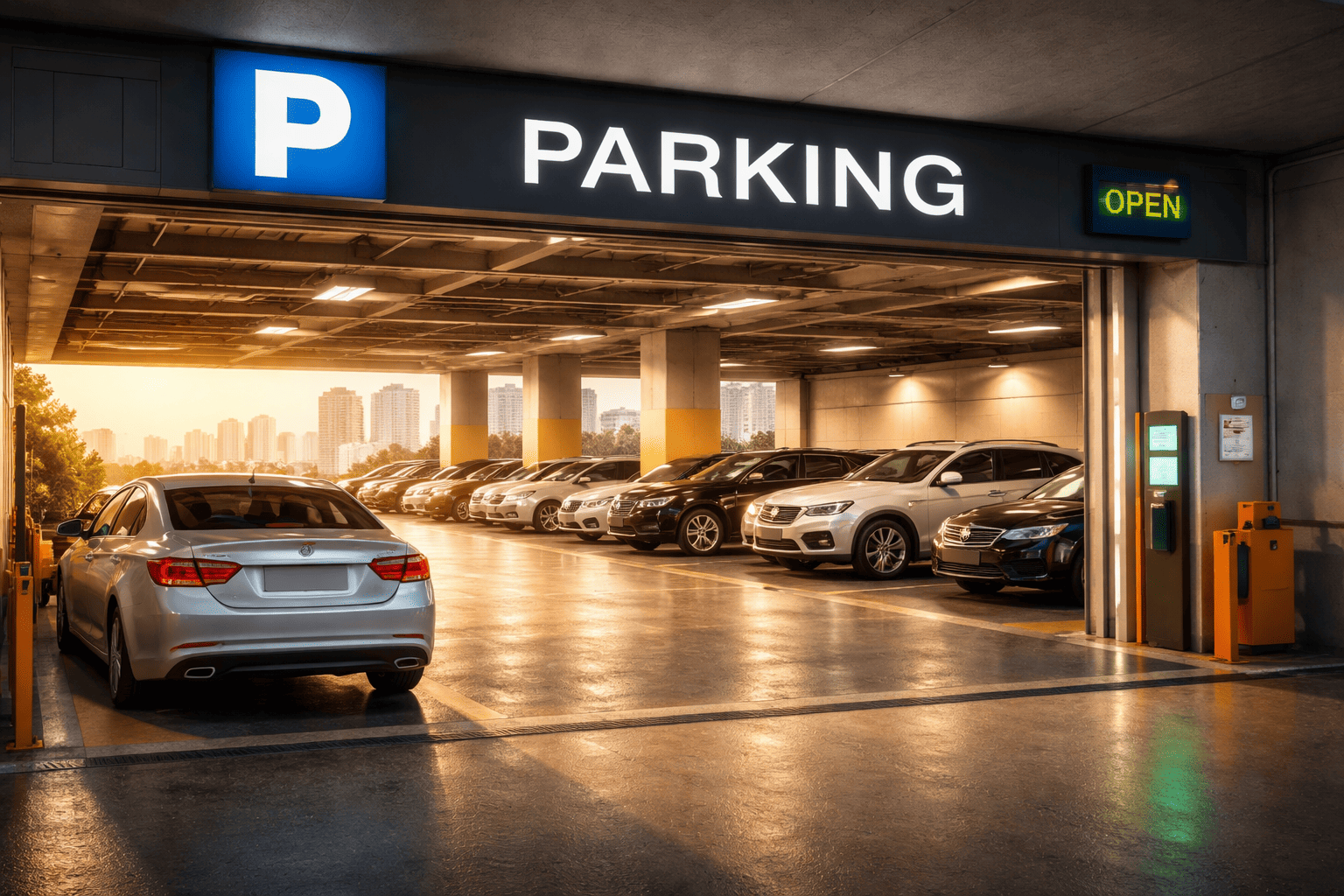
Parking safety is not consistent throughout the year. During peak travel seasons such as summer holidays, Christmas, Easter, and extended bank holidays, airport parking conditions change in ways that directly affect vehicle security and handling.
At busy times, parking facilities experience higher traffic volumes, tighter schedules, and increased pressure on staff and systems. These shifts do not automatically make parking unsafe, but they do change where risks appear and how well they are controlled.
What Defines a Peak Travel Season for Airport Parking?
A peak travel season is any period when flight demand increases sharply and parking facilities operate close to full capacity. Around major airports, this usually coincides with school holidays, public holidays, and periods affected by flight disruptions or weather delays.
During these times, cars arrive in clusters rather than evenly spaced throughout the day. Vehicles often remain parked for longer, and turnaround windows become narrower, all of which influence how parking safety is managed on the ground.
For travellers planning trips around holidays, this guide on Holiday travel & parking: how to keep your car secure explains how seasonal demand affects vehicle safety decisions.
Higher Vehicle Volume Changes Risk Patterns
One of the most noticeable changes during peak seasons is vehicle density. Parking areas fill more quickly, cars are parked closer together, and vehicle movement continues almost constantly.
This environment increases the likelihood of minor damage and reduces visibility across large parking areas. Facilities that adapt well focus on controlling traffic flow and access rather than simply increasing capacity, which helps maintain safety even under pressure.
This is why comparing Off-site vs on-site parking: which is more secure? becomes especially important when parking areas operate close to full capacity.
Why Security Systems Matter More During Busy Periods
During quieter months, security systems support daily operations. During peak travel seasons, they become central to maintaining order and accountability.
Effective parking facilities rely on systems that are actively managed, not just installed. This includes real-time CCTV monitoring, controlled entry and exit points, and accurate vehicle logging. Passive systems may look reassuring on paper but often fail to prevent issues when demand spikes.
A deeper look at this can be found in How cctv and patrols improve airport parking security, which explains how active monitoring reduces risk during high-traffic periods.
Staffing Pressure and Its Effect on Safety
Peak seasons place significant strain on parking staff. Higher vehicle numbers, faster processing times, and longer working hours can increase the risk of errors if teams are not properly supported.
Parking locations that prepare in advance by increasing staffing levels and reinforcing procedures tend to maintain stable safety standards. Where preparation is lacking, supervision may weaken, and response times can slow during critical moments.
Facilities that manage staffing well during peak periods often share characteristics highlighted in Top features of a secure airport parking lot.
Seasonal Weather Adds an Extra Layer of Risk
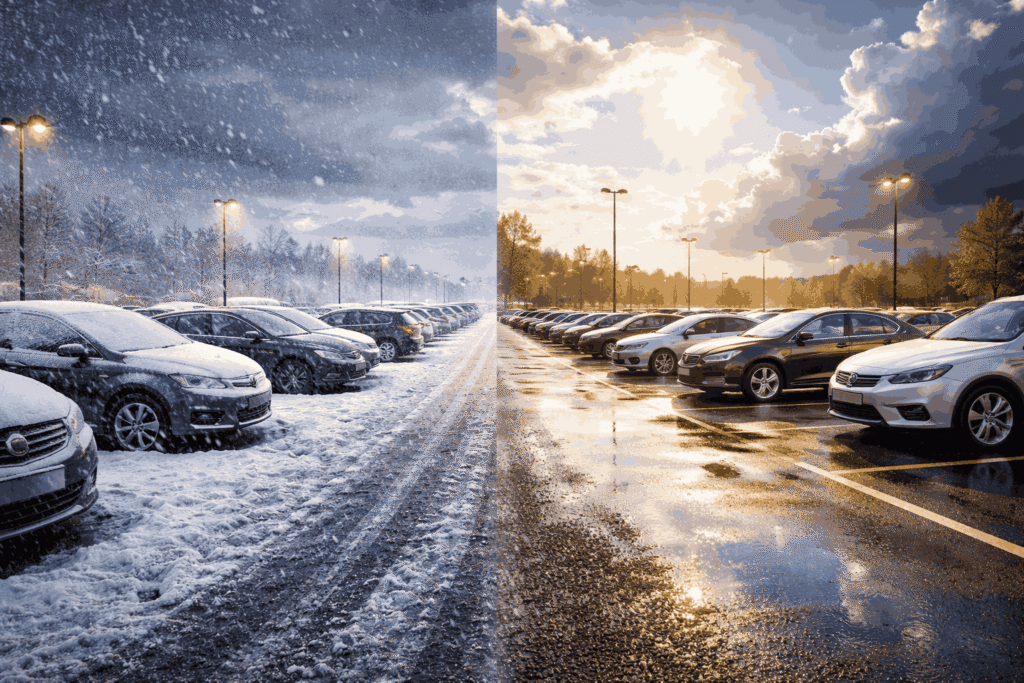
Peak travel often overlaps with challenging weather conditions. Winter travel brings frost, rain, and reduced visibility, while summer can introduce glare, heat-related surface issues, and sudden storms.
These conditions affect how vehicles are moved, parked, and monitored. Facilities that adjust lighting, surface maintenance, and inspection routines based on season reduce avoidable risks compared to those using the same approach year-round.
Weather-related exposure is also discussed in Is covered parking safer than open parking near airports?, especially for longer stays during busy seasons.
What Changes for Travellers During Peak Seasons?
From a traveller’s point of view, parking during peak seasons feels different for several reasons:
- Drop-off and collection areas are busier than usual
- Procedures may be stricter to manage volume
- Waiting times can increase during early mornings or late evenings
These changes are normal responses to higher demand and are often signs that a facility is actively managing risk rather than ignoring it.
Why Last-Minute Parking Choices Carry More Risk
Busy travel periods push many travellers into making quick parking decisions due to limited availability or rising prices. This increases the chance of choosing locations with unclear security practices or poor oversight.
Reliable parking providers remain consistent even during peak demand. Clear booking terms, visible safety measures, and transparent procedures usually indicate that a facility is prepared for pressure rather than overwhelmed by it.
Travellers booking late should be aware of warning signs outlined in Why cheap parking near dublin airport might not be safe and Dublin Airport Parking Scams: Key Signs to Stay Safe.
How Professional Parking Operators Prepare for Peak Demand
Experienced airport parking operators treat peak seasons as a planning exercise rather than a challenge to react to at the last minute.
Preparation typically includes:
- Reviewing security coverage and patrol routines
- Increasing staff presence during high-traffic hours
- Limiting intake if safety standards could be affected
This approach helps ensure that parking safety remains stable, even when demand reaches its highest point.
Final Thoughts
Parking safety does not decline automatically during peak travel seasons, but it does change. Higher vehicle density, increased operational pressure, heavier reliance on security systems, and seasonal conditions all shape how risks appear and how effectively they are managed. Travellers who recognise these shifts are better placed to choose parking that remains organised, secure, and dependable during the busiest times of the year.
For travellers using Dublin Airport during peak periods, choosing a parking provider that plans for high demand and maintains consistent safety standards can make a real difference. If you would like clear guidance on parking safety or have questions before travelling, RS Express Parking can be contacted on +353 1 964 0011 or by email at support@rsexpressparking.com for practical, straightforward assistance.
FAQs
Does parking become less safe during peak travel seasons?
Parking does not automatically become unsafe during peak travel seasons, but risks can increase due to higher vehicle volume, tighter schedules, and operational pressure. Well-prepared parking facilities adapt their security and staffing to manage these changes effectively.
Why is vehicle damage more common during busy travel periods?
During peak seasons, cars are parked closer together and moved more frequently. This increases the chance of minor scratches or dents, especially in overcrowded or poorly managed parking locations.
Are security systems more important during peak travel times?
Yes. CCTV monitoring, controlled access points, and vehicle logging play a much bigger role during busy periods. Facilities that actively manage these systems are better equipped to maintain safety under pressure.
Does staffing affect parking safety during high-demand periods?
Staffing has a direct impact on parking safety. During peak seasons, experienced and well-supported staff help maintain proper supervision and vehicle handling, while understaffed locations are more prone to errors and delays.
How does seasonal weather impact parking safety?
Weather conditions such as rain, frost, glare, or reduced visibility can increase risk during peak travel seasons. Parking facilities that adjust lighting, surface maintenance, and inspection routines reduce weather-related issues.
Is last-minute airport parking riskier during peak seasons?
Last-minute bookings can carry more risk during busy periods, especially if travellers choose parking locations with unclear security practices. Planning ahead usually allows access to better-managed and more reliable facilities.
What should travellers look for in parking during peak travel seasons?
Travellers should look for clear booking terms, visible security measures, controlled access, and consistent procedures. These indicators suggest that a parking provider is prepared to operate safely during high-demand periods.