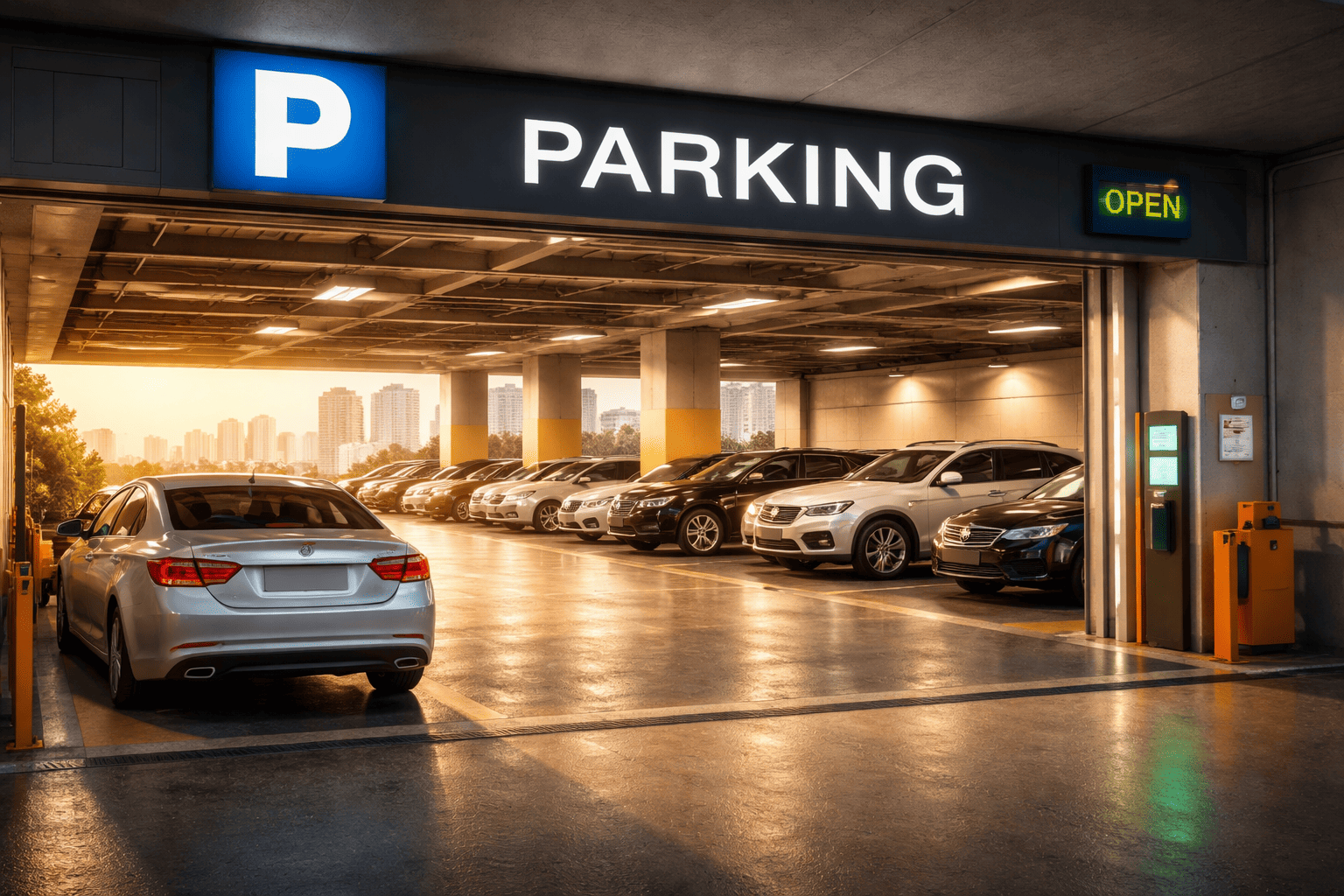
Travelling for more than a month changes how you plan things. Flights, luggage, insurance, documents – everything gets checked twice. But one question many drivers quietly ask before heading to Dublin Airport is this:
What actually happens to a car when it sits unused for 30 days or more?
Is it bad for the battery?
Will tyres get damaged?
Does fuel go stale?
Is it safe to leave it that long?
If you are considering long-term Dublin Airport parking, understanding what genuinely happens during extended parking helps you prepare properly and avoid unnecessary stress when you return.
Let’s break it down clearly, practically, and without myths.
At a Glance
If your car is in good condition before you leave:
- The battery may lose some charge
- Tyres can develop temporary flat spots
- Light surface rust may form on brake discs
- Fuel remains stable for several weeks
- Fluids do not deteriorate in 30 days
- Security becomes the biggest concern
Thirty days alone do not damage a healthy vehicle. Poor preparation and poor parking conditions do.
The Battery: The Most Common Issue
Modern vehicles constantly draw small amounts of power even when turned off. Alarm systems, central locking receivers, onboard computers, and trackers all consume electricity.
Over 30+ days, this parasitic drain can weaken the battery.
If your battery is:
- More than three years old
- Already slightly weak
- Exposed to cold weather
You may return to slow ignition or a non-start.
In Ireland’s cooler climate, battery performance drops further during the winter months.
Best practice before long-term parking:
- Ensure the battery is healthy
- Turn off all interior lights
- Unplug dash cams or accessories
- Fully close doors and boot
At secure facilities like RS Express Parking, vehicles are stored safely, but battery health always starts with the vehicle owner’s preparation.
Tyres: Flat Spots and Pressure Changes
When a car remains stationary for weeks, the vehicle’s weight presses on the same tyre surface area continuously.
After 30+ days, you may notice:
- Slight vibration when first driving
- A feeling of stiffness at low speeds
This is usually temporary and resolves after a short drive.
However, under-inflated tyres increase the likelihood of more noticeable flat spotting.
Before parking:
- Check tyre pressure
- Inflate to the manufacturer’s recommendations
- Avoid parking on uneven or soft surfaces
Professional airport parking with level, structured spaces reduces uneven stress on tyres.
Brakes: Surface Rust Is Normal
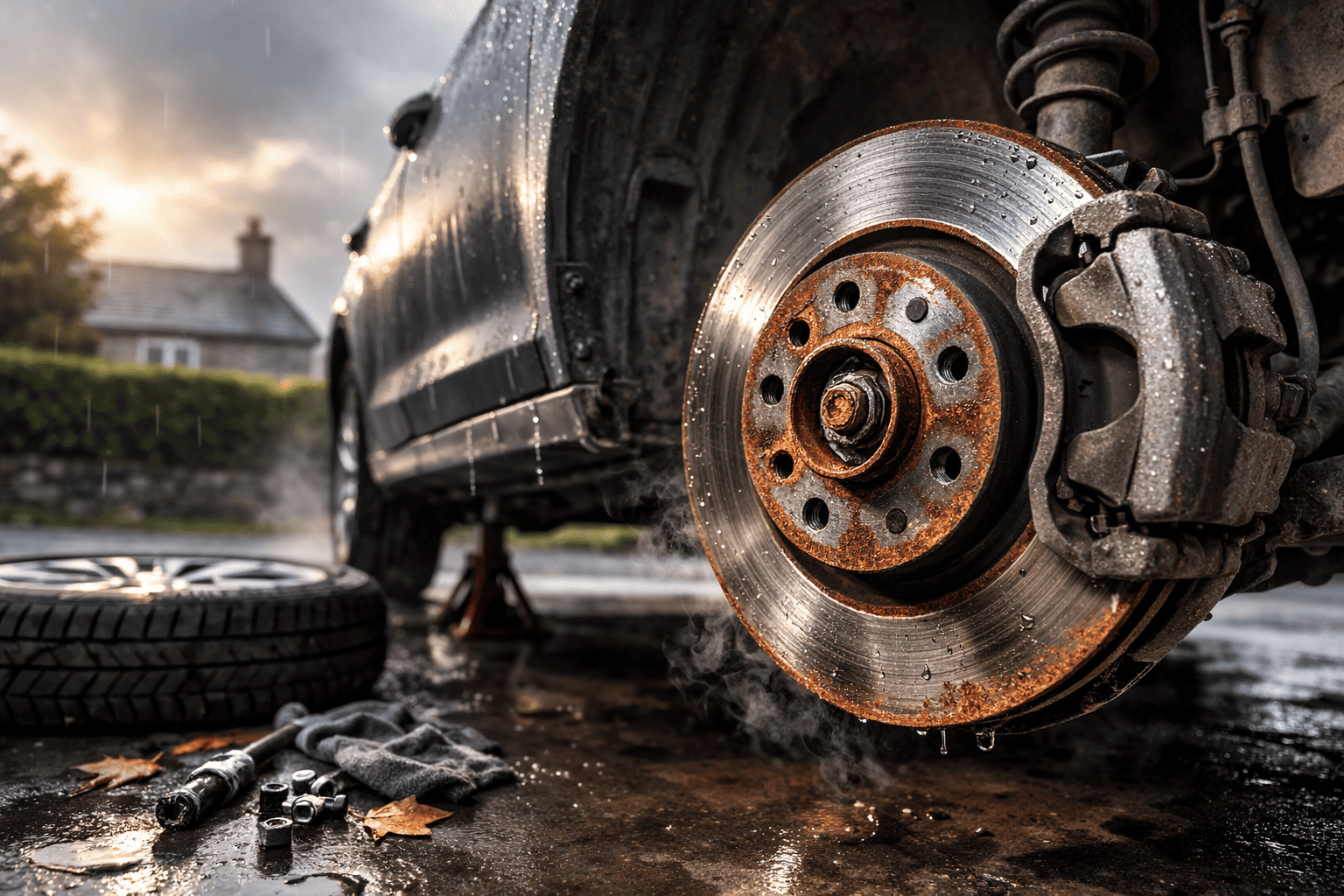
Ireland’s damp climate makes light surface rust common on brake discs when a car sits unused.
After 30 days, you may notice:
- A faint grinding sound initially
- Slight roughness during the first few brake applications
This is normal and typically clears after a few stops.
It becomes a concern only if:
- Brake pads were already worn
- The vehicle was parked for several months
- Moisture exposure was excessive
Thirty days alone do not damage healthy braking systems.
Engine Oil and Fluids: No Immediate Degradation
There is a misconception that fluids “go bad” after a few weeks.
In reality:
- Engine oil does not degrade in 30 days
- Coolant remains stable
- Transmission fluid is unaffected
- Power steering fluid remains unchanged
Problems arise only if:
- The vehicle was overdue for service
- There were existing leaks
- Oil was already contaminated
If your car was mechanically sound before parking, 30 days will not cause fluid-related damage.
Fuel: Stability and Condensation
Modern petrol typically remains stable for several months.
However, leaving a near-empty tank increases the risk of condensation inside the tank, particularly in damp environments.
Moisture can form when temperatures fluctuate.
Best advice:
Leave your vehicle with at least half a tank of fuel before long-term parking.
This reduces air space and lowers condensation risk.
Exterior Condition: Exposure Matters
Time is not the biggest threat to your car’s exterior. Exposure is.
Over 30+ days, risks include:
- Bird droppings
- Tree sap
- Coastal air
- Dirt accumulation
- Vandalism or accidental damage
This is where location matters more than duration.
A secure Dublin Airport parking facility significantly reduces environmental and security risks compared to leaving a car on residential streets for weeks.
RS Express Parking offers:
- Monitored premises
- Controlled access
- Organised vehicle storage
- Professional meet and greet handling
When parking for more than a month, the environment matters as much as time.
Security: The Real Long-Term Concern
Mechanical concerns are usually minor.
Security is the real factor.
Leaving a vehicle unattended on a public road for 30+ days increases exposure to:
- Theft
- Break-ins
- Vandalism
- Accidental impact
For extended travel, structured long-term Dublin Airport parking is significantly safer than street parking.
Professional facilities reduce uncertainty and provide peace of mind.
Modern Cars Are Designed to Sit
Manufacturers design vehicles to withstand periods of inactivity.
A healthy car can comfortably sit for 30 days without long-term mechanical damage.
Issues typically arise after:
- Several months
- Poor maintenance
- Severe weather exposure
- Battery neglect
Thirty days is manageable. Poor preparation is not.
Practical Checklist Before Leaving Your Car for 30+ Days
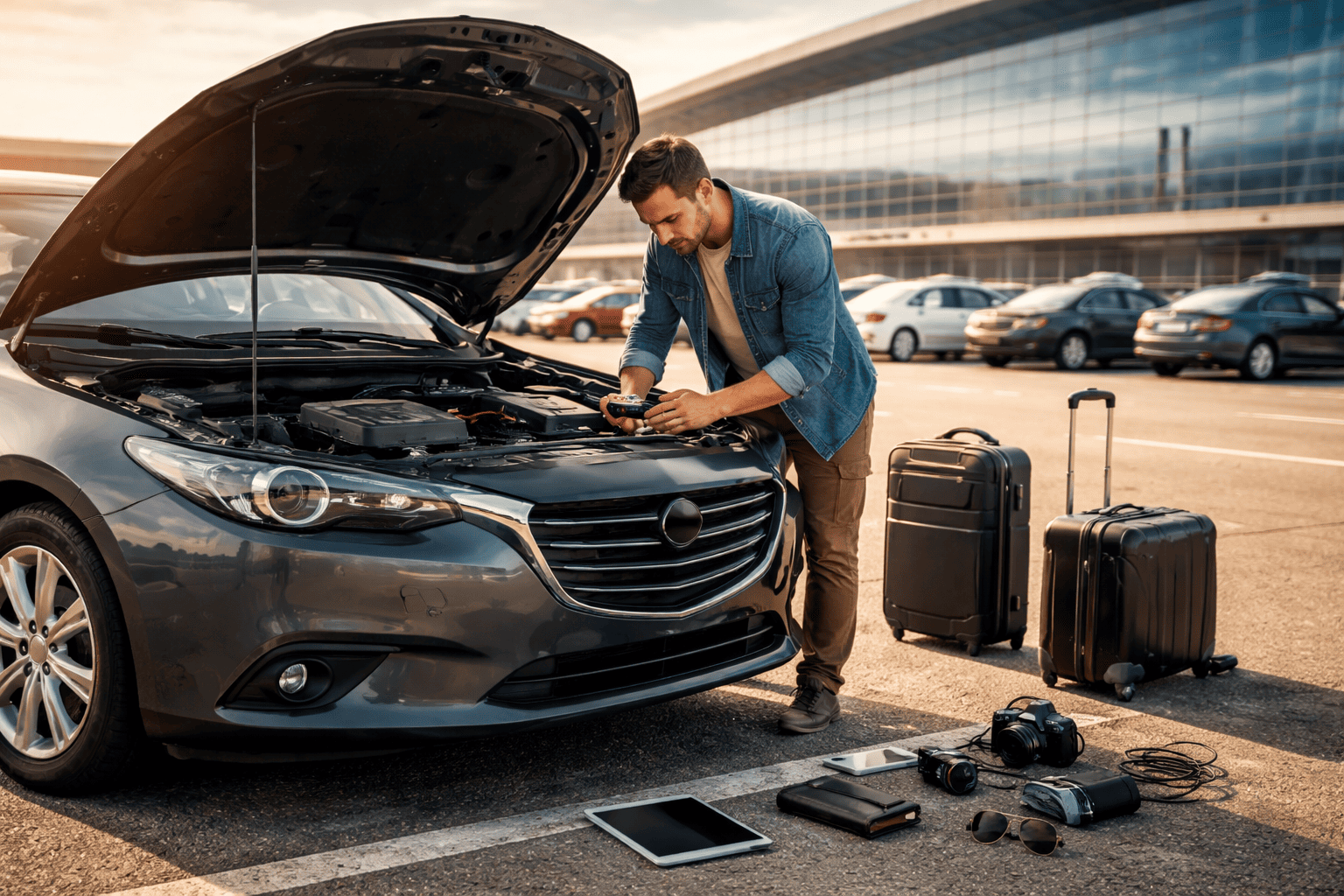
Before heading to Dublin Airport:
- Check battery health
- Confirm tyre pressure
- Leave at least half a tank of fuel
- Remove valuables
- Close all windows fully
- Take photos for the records
- Ensure the vehicle is clean to prevent contaminants from sitting on the paintwork
Simple preparation ensures a smooth return.
Final Thoughts
If your vehicle is in good condition and parked properly, leaving it for 30+ days will not cause serious damage.
You may experience:
- Slight battery weakening
- Temporary tyre stiffness
- Light surface brake rust
All of which typically resolve quickly.
The real decision is not whether your car can sit for 30 days. It can.
The real decision is where you leave it.
If you are travelling from Dublin Airport for an extended period, choose secure, reliable long-term parking with professional handling.
RS Express Parking provides trusted long-term Dublin Airport parking with meet and greet service, secure monitored facilities, and structured vehicle care.
For bookings or enquiries:
Email: support@rsexpressparking.com
Mobile: +353 1 964 0011
Travel with confidence knowing your car is in safe hands while you are away.
FAQs
Is it bad to leave a car parked for more than 30 days?
A healthy, well-maintained car can safely sit for 30 days without major issues. Most modern vehicles are designed to handle periods of inactivity. Problems usually arise from weak batteries, low tyre pressure, or poor parking conditions rather than the length of time alone.
Will my car battery die after 30 days?
It can, especially if the battery is older or already weak. Modern cars draw small amounts of power even when switched off. If the battery is in good condition, 30 days is generally manageable, but it is still the most common issue with long-term parking.
Should I disconnect the battery before long-term parking?
For a one-month period, disconnecting the battery is not usually necessary if it is healthy. However, if your battery is older or you are travelling for longer than 30 days, disconnecting it can reduce the risk of returning to a flat battery.
Do tyres get damaged if a car is not moved for a month?
Tyres can develop temporary flat spots after sitting for several weeks. In most cases, this disappears after a short drive. Ensuring correct tyre pressure before parking significantly reduces the risk.
Does fuel go bad after 30 days?
No, modern petrol does not normally go bad within 30 days. It typically remains stable for several months. Leaving at least half a tank helps reduce condensation inside the fuel tank, particularly in Ireland’s damp climate.
Is it safer to use long-term Dublin Airport parking instead of street parking?
Yes. Leaving a vehicle on a public street for over a month increases the risk of theft, vandalism, and accidental damage. Secure long-term Dublin Airport parking offers monitored facilities, controlled access, and professional handling for added peace of mind.
What should I check before leaving my car for an extended trip?
Before travelling, check battery condition, tyre pressure, fluid levels, and fuel level. Remove valuables and ensure windows and doors are fully secured. Choosing a reliable provider such as RS Express Parking further reduces risks while you are away.